Season 2024: Early Preview
With the Broncos’ 2023 NRL campaign in the books, and the club already largely fill their Top 30 senior squad for the 2024 NRL season, it’s an opportune time to look at the on-field production of each player in that senior squad in order to identify their comparative ranking and how the Broncos might line up in the new campaign.
Methodology
In assessing the on-field production and the comparative ranking of each player which will seemingly comprise the Broncos’ Top 30 squad for the 2024 season, each player from that squad has been allocated into one of four positional categories (with some players considered in multiple positional categories due to their notional versatility).
Those four positional categories consist of:
- forwards
- centres and wingers
- halves and hooker
- fullback.
Once categorised, each player’s output in defined key performance indicators (KPIs) for their respective positional category has then been considered, using data sourced from the NRL.
Different weightings were then assigned to the KPI data considered for each positional group based on the assumption that the cornerstone of the Broncos’ tactical approach in 2024 will be as follows:
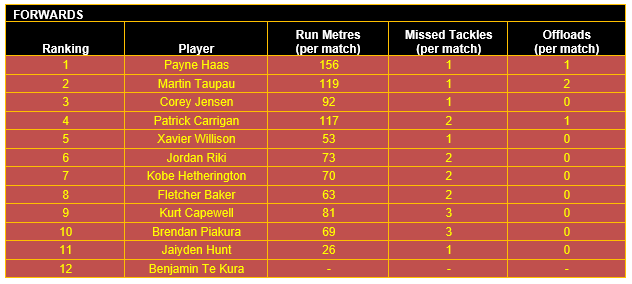
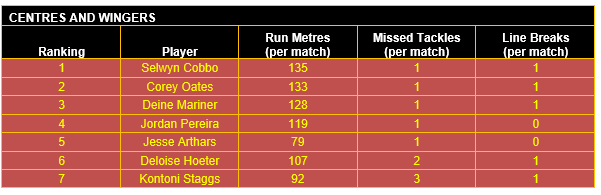
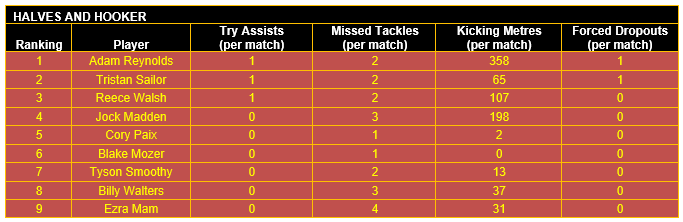
- To have minimal missed tackles (<2 missed tackles per player per game) in the forward, centre and wing and half and hooker positional groups.
- To generate 100+ run metres and multiple offloads per game from each player in the forward positional group.
- To generate 100+ run metres and multiple line breaks per game from each player within the centre and wing positional group.
- To generate 100+ kicking metres and multiple try assists and forced drop outs per game from each player in the halves and hooker positional group.
- To generate 100+ run metres and 100+ kicking metres and multiple try assists and forced drop outs per game from each player in the fullback positional group.
The findings provide an invaluable insight as to:
- how each player ranks against their internal competition within their positional category; and
- which 17 players would appear to make up the Broncos’ most productive team for the 2024 NRL season.
Internal player rankings

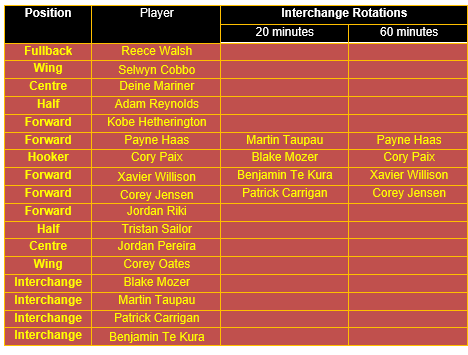
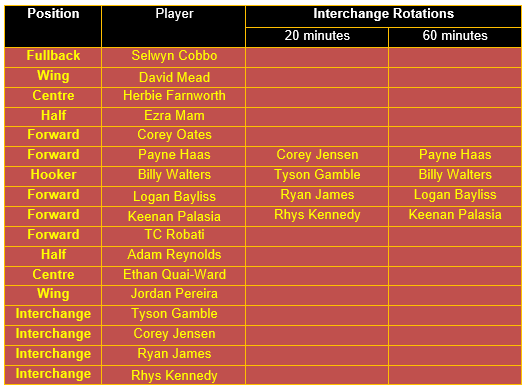
Line up
Based on the above analytical comparison, the 17 players which would appear to comprise the Broncos’ most productive team for the 2024 NRL season would appear to be as follows:
Freddie08
Broncos Player Analysis: Round 24 Team Selection
Following the Broncos victory against the North Queensland Cowboys, attention now turns to the Broncos clash versus the Parramatta Eels, and which 17 available players make up the Broncos’ most productive team for the match.
To do this, we need to look at the on-field production and the comparative ranking of each player which comprises the Broncos’ senior squad.
Methodology
In assessing the on-field production and the comparative ranking of each player which comprise the Broncos’ senior squad, each player is allocated into four positional categories (with some players considered in multiple positional categories due to their perceived versatility).
Those positional categories consist of:
- forwards;
- halves and hooker;
- centres and wingers; and
- fullback.
Once categorised, each player’s output in defined key performance indicators (KPIs) for their respective positional category is then considered, using data sourced from the NRL.
To provide a realistic picture of each individual player’s on-field production, only data from those seasons, throughout the player’s professional career, where the player has played at least 13 games in the NRL, was considered. Where a player has not met that criteria, their productivity data was not assessed.
The KPI data considered for each positional group is based on the assumption that the cornerstones of the Broncos’ tactical approach is as follows:
- All players in all positional categories (excluding the fullback positional group), to have minimal missed tackles (<2 missed tackles per player per game).
- Each player in the forward positional group to generate 100+ run metres and multiple offloads (1+) per game (to create second phase play for the halves, hooker and/or fullback to create try assist opportunities for the centre and winger positional group).
- Each player within the centre and wing positional group to generate 100+ run metres and multiple line breaks (1+) per game.
- Each player in the halves and hooker positional groups to generate 100+ kicking metres, and multiple try assists (1+), and forced dropouts (1+) per game.
- Each player in the fullback positional groups to generate 100+ run metres, 100+ kicking metres and multiple try assists (1+), and forced dropouts (1+) per game.
The findings provide an invaluable insight as to:
- how each player ranks against their internal competition within their positional category; and
- which 17 players make up the Broncos’ most productive team.
Internal player rankings
The player rankings by position are as follows:
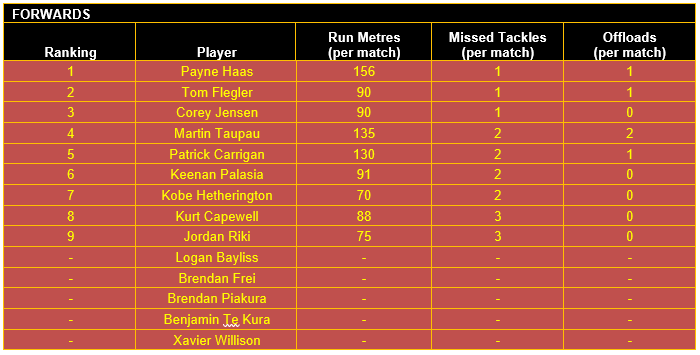
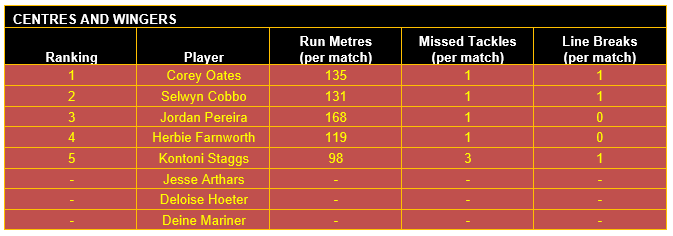
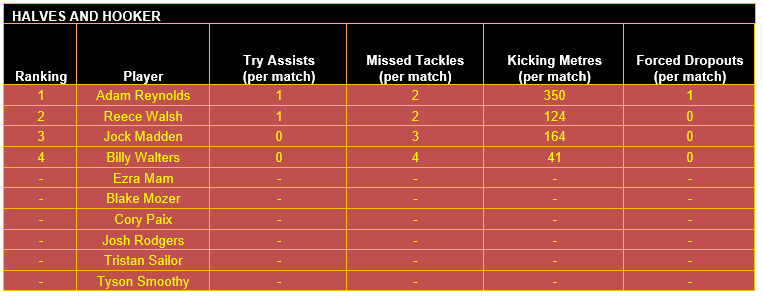

Round 24 line-up
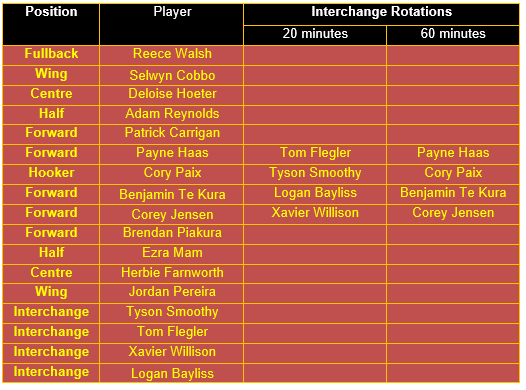
Based on the above analytical comparison, the Broncos’ aforementioned tactical basis and minimum required KPIs, and with Arthars and Oates recovering from injury and Taupau suspended, the 17 players which comprise the Broncos’ most productive team for their Round 24 clash vs the Parramatta Eels would appear to be as follows:
Freddie08
Broncos Player Analysis: Round 4 Team Selection
Following the Broncos victory against the St George Dragons, attention now turns to the Broncos clash versus the Redcliffe Dolphins, and which 17 available players make up the Broncos’ most productive team for the match.
To do this, we need to look at the on-field production and the comparative ranking of each player which comprises the Broncos’ senior squad.
Methodology
In assessing the on-field production and the comparative ranking of each player which comprise the Broncos’ senior squad, each player is allocated into four positional categories (with some players considered in multiple positional categories due to their perceived versatility).
Those positional categories consist of:
- forwards;
- halves and hooker;
- centres and wingers; and
- fullback.
Once categorised, each player’s output in defined key performance indicators (KPIs) for their respective positional category is then considered, using data sourced from the NRL.
To provide a realistic picture of each individual player’s on-field production, only data from those seasons, throughout the player’s professional career, where the player has played at least 13 games in the NRL, was considered. Where a player has not met that criteria, their productivity data was not assessed.
The KPI data considered for each positional group is based on the assumption that the cornerstones of the Broncos’ tactical approach is as follows:
- All players in all positional categories (excluding the fullback positional group), to have minimal missed tackles (<2 missed tackles per player per game).
- Each player in the forward positional group to generate 100+ run metres and multiple offloads (1+) per game (to create second phase play for the halves, hooker and/or fullback to create try assist opportunities for the centre and winger positional group).
- Each player within the centre and wing positional group to generate 100+ run metres and multiple line breaks (1+) per game.
- Each player in the halves and hooker positional groups to generate 100+ kicking metres, and multiple try assists (1+), and forced dropouts (1+) per game.
- Each player in the fullback positional groups to generate 100+ run metres, 100+ kicking metres and multiple try assists (1+), and forced dropouts (1+) per game.
The findings provide an invaluable insight as to:
- how each player ranks against their internal competition within their positional category; and
- which 17 players make up the Broncos’ most productive team.
Internal player rankings
The player rankings by position are as follows:
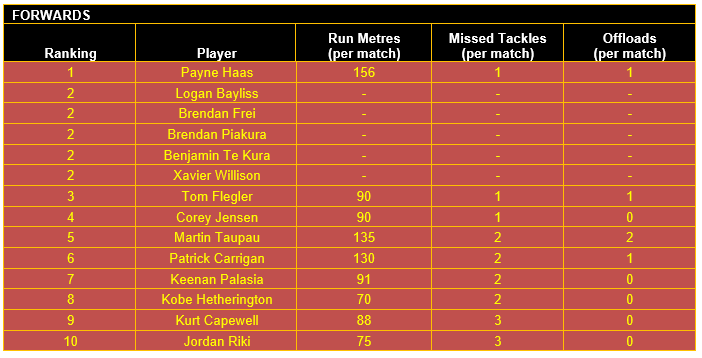

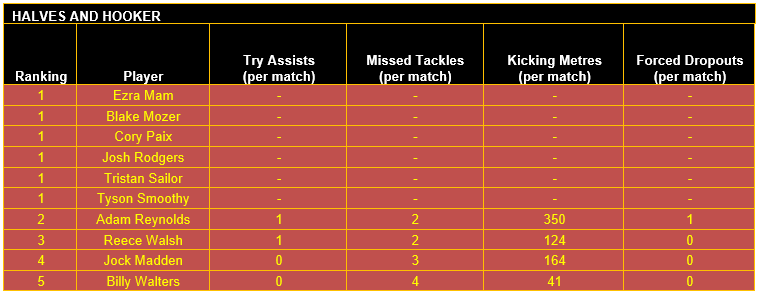

Round 4 line-up
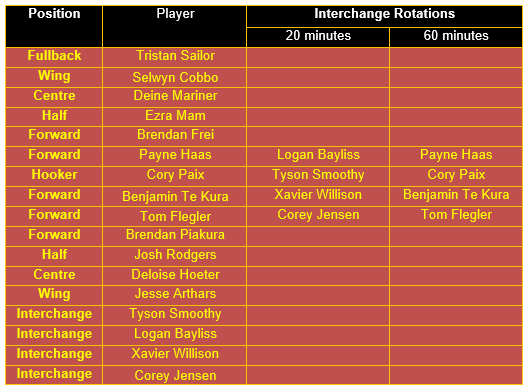
Based on the above analytical comparison, the Broncos’ aforementioned tactical basis and minimum required KPIs, and with Hetherington and Oates recovering from injury, the 17 players which comprise the Broncos’ most productive team for their Round 4 clash vs the Redcliffe Dolphins would appear to be as follows:
Freddie08
Broncos Player Analysis: Round 3 Team Selection
Following the Broncos impressive victory against the North Queensland Cowboy, attention now turns to the Broncos clash versus the St George Dragons, and which 17 available players make up the Broncos’ most productive team for the match.
To do this, we need to look at the on-field production and the comparative ranking of each player which comprises the Broncos’ senior squad.
Methodology
In assessing the on-field production and the comparative ranking of each player which comprise the Broncos’ senior squad, each player is allocated into four positional categories (with some players considered in multiple positional categories due to their perceived versatility).
Those positional categories consist of:
- forwards;
- halves and hooker;
- centres and wingers; and
- fullback.
Once categorised, each player’s output in defined key performance indicators (KPIs) for their respective positional category is then considered, using data sourced from the NRL.
To provide a realistic picture of each individual player’s on-field production, only data from those seasons, throughout the player’s professional career, where the player has played at least 13 games in the NRL, was considered. Where a player has not met that criteria, their productivity data was not assessed.
The KPI data considered for each positional group is based on the assumption that the cornerstones of the Broncos’ tactical approach is as follows:
- All players in all positional categories (excluding the fullback positional group), to have minimal missed tackles (<2 missed tackles per player per game).
- Each player in the forward positional group to generate 100+ run metres and multiple offloads (1+) per game (to create second phase play for the halves, hooker and/or fullback to create try assist opportunities for the centre and winger positional group).
- Each player within the centre and wing positional group to generate 100+ run metres and multiple line breaks (1+) per game.
- Each player in the halves and hooker positional groups to generate 100+ kicking metres, and multiple try assists (1+), and forced dropouts (1+) per game.
- Each player in the fullback positional groups to generate 100+ run metres, 100+ kicking metres and multiple try assists (1+), and forced dropouts (1+) per game.
The findings provide an invaluable insight as to:
- how each player ranks against their internal competition within their positional category; and
- which 17 players make up the Broncos’ most productive team.
Internal player rankings
The player rankings by position are as follows:
Round 3 line-up
Based on the above analytical comparison, the Broncos’ aforementioned tactical basis and minimum required KPIs, and with Hetherington and Oates recovering from injury, the 17 players which comprise the Broncos’ most productive team for their Round 3 clash vs the St George Dragons would appear to be as follows:
Freddie08
Broncos Player Analysis: Round 1 Team Selection
With 2023 NRL season commencing, attention for the Broncos is focused on their clash versus the Penrith Panthers, and which 17 available players make up the Broncos’ most productive team for the match.
To do this, we need to look at the on-field production and the comparative ranking of each player which comprises the Broncos’ senior squad.
Methodology
In assessing the on-field production and the comparative ranking of each player which comprise the Broncos’ senior squad, each player is allocated into four positional categories (with some players considered in multiple positional categories due to their perceived versatility).
Those positional categories consist of:
- forwards;
- halves and hooker;
- centres and wingers; and
- fullback.
Once categorised, each player’s output in defined key performance indicators (KPIs) for their respective positional category is then considered, using data sourced from the NRL.
To provide a realistic picture of each individual player’s on-field production, only data from those seasons, throughout the player’s professional career, where the player has played at least 13 games in the NRL, was considered. Where a player has not met that criteria, their productivity data was not assessed.
The KPI data considered for each positional group is based on the assumption that the cornerstones of the Broncos’ tactical approach is as follows:
- All players in all positional categories (excluding the fullback positional group), to have minimal missed tackles (<2 missed tackles per player per game).
- Each player in the forward positional group to generate 100+ run metres and multiple offloads (1+) per game (to create second phase play for the halves, hooker and/or fullback to create try assist opportunities for the centre and winger positional group).
- Each player within the centre and wing positional group to generate 100+ run metres and multiple line breaks (1+) per game.
- Each player in the halves and hooker positional groups to generate 100+ kicking metres, and multiple try assists (1+), and forced dropouts (1+) per game.
- Each player in the fullback positional groups to generate 100+ run metres, 100+ kicking metres and multiple try assists (1+), and forced dropouts (1+) per game.
The findings provide an invaluable insight as to:
- how each player ranks against their internal competition within their positional category; and
- which 17 players make up the Broncos’ most productive team.
Internal player rankings
The player rankings by position are as follows:
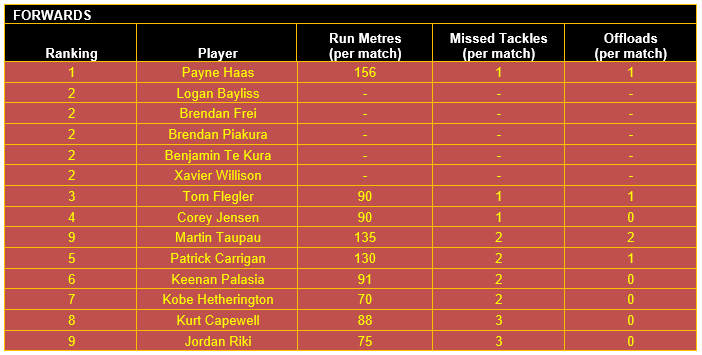
Round 1 line-up
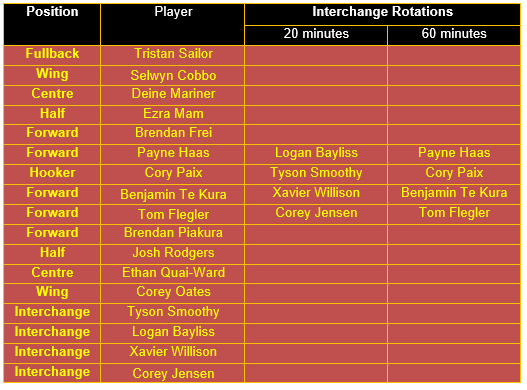
Based on the above analytical comparison, the Broncos’ aforementioned tactical basis and minimum required KPIs, and with Hetherington and Walsh recovering from injury, the 17 players which comprise the Broncos’ most productive team for their Round 1clash vs the Penrith Panthers would appear to be as follows:
Freddie08
Broncos Player Analysis: Round 9 Team Selection
Following the Broncos’ impressive victory against the Cronulla Sharks, attention now turns to the Broncos’ clash versus the South Sydney Rabbitohs, and which 17 available players make up the Broncos’ most productive team for the match.
To do this, we need to look at the on-field production and the comparative ranking of each player which comprises the Broncos’ senior squad.
Methodology
In assessing the on-field production and the comparative ranking of each player which comprise the Broncos’ senior squad, each player is allocated into four positional categories (with some players considered in multiple positional categories due to their perceived versatility).
Those positional categories consist of:
- forwards;
- halves and hooker;
- centres and wingers; and
- fullback.
Once categorised, each player’s output in defined key performance indicators (KPIs) for their respective positional category is then considered, using data sourced from the NRL and QRL.
To provide a realistic picture of each individual player’s on-field production, only data from those seasons, throughout the player’s professional career, where the player has played at least 13 games in the NRL or Queensland Cup, was considered. Where a player has not met that criteria, their productivity data was not assessed.
The KPI data considered for each positional group is based on the assumption that the cornerstones of the Broncos’ tactical approach is as follows:
- To have minimal missed tackles (<2 missed tackles per player per game) in all positional categories (excluding the fullback positional group).
- To generate 100+ run metres and multiple offloads per game from each player in the forward positional group (to create second phase play for the halves, hooker and/or fullback to create line break opportunities for the centre and winger positional group).
- To generate 100+ run metres and multiple line breaks per game from each player within the centre and wing positional group.
- To generate 100+ kicking metres, and multiple line break assists, and forced drop outs per game from each player in the halves and hooker positional groups.
- To generate 100+ run metres, 100+ kicking metres and multiple line breaks, line break assists, and forced drop outs per game from each player in the fullback positional groups.
The findings provide an invaluable insight as to:
- how each player ranks against their internal competition within their positional category; and
- which 17 players make up the Broncos’ most productive team.
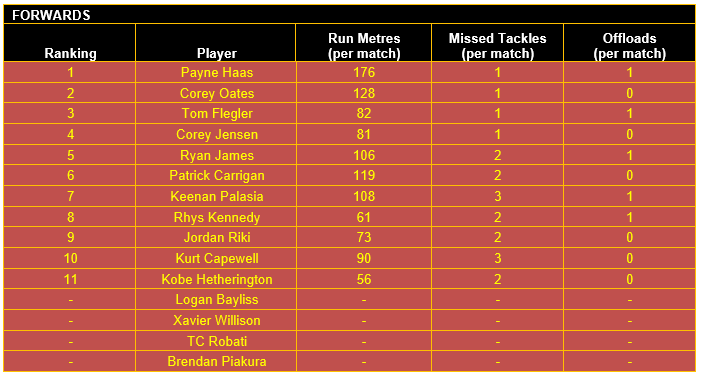
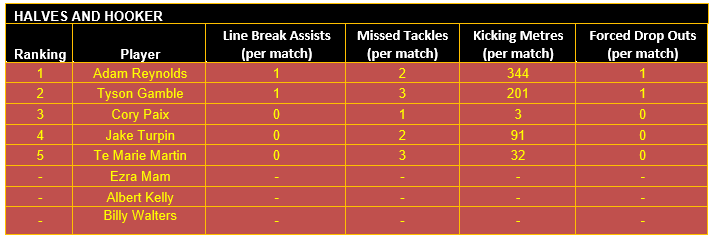
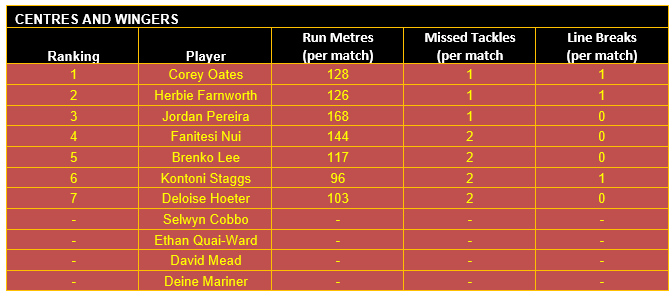
Internal player rankings
The player rankings by position are as follows:
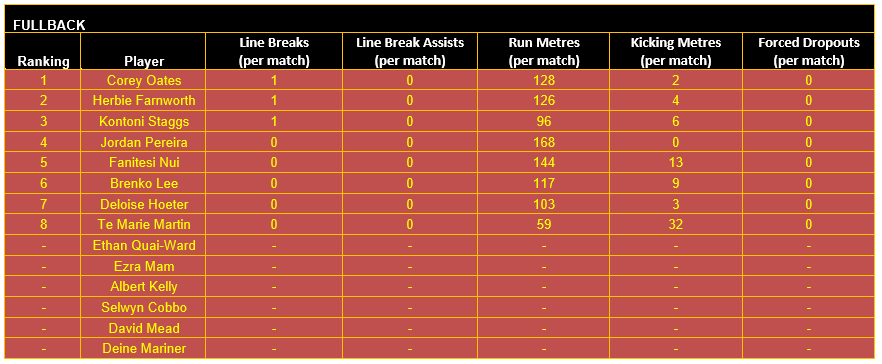
Round 9 line-up
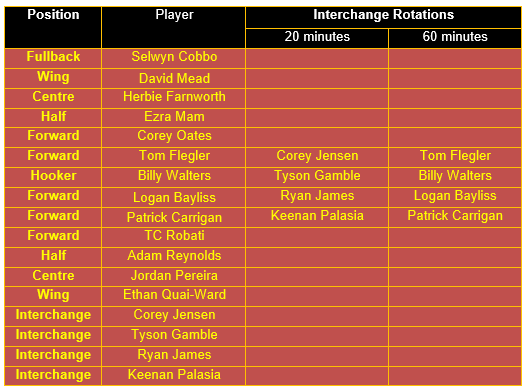
Based on the above analytical comparison, the Broncos’ aforementioned tactical basis and minimum required KPIs, and with Nui, Kelly, Turpin, Haas, Willison, Capewell and Piakura recovering from injury, the 17 players which comprise the Broncos’ most productive team for their Round 9 clash vs the South Sydney Rabbitohs would appear to be as follows:
Freddie08
Broncos Player Analysis: Round 8 Team Selection
Following the Broncos’ impressive performance against the Canterbury Bulldog, attention now turns to the Broncos’ clash versus the Cronulla Sharks, and which 17 available players make up the Broncos’ most productive team for the match.
To do this, we need to look at the on-field production and the comparative ranking of each player which comprises the Broncos’ senior squad.
Methodology
In assessing the on-field production and the comparative ranking of each player which comprise the Broncos’ senior squad, each player is allocated into four positional categories (with some players considered in multiple positional categories due to their perceived versatility).
Those positional categories consist of:
- forwards;
- halves and hooker;
- centres and wingers; and
- fullback.
Once categorised, each player’s output in defined key performance indicators (KPIs) for their respective positional category is then considered, using data sourced from the NRL and QRL.
To provide a realistic picture of each individual player’s on-field production, only data from those seasons, throughout the player’s professional career, where the player has played at least 13 games in the NRL or Queensland Cup, was considered. Where a player has not met that criteria, their productivity data was not assessed.
The KPI data considered for each positional group is based on the assumption that the cornerstones of the Broncos’ tactical approach is as follows:
- To have minimal missed tackles (<2 missed tackles per player per game) in all positional categories (excluding the fullback positional group).
- To generate 100+ run metres and multiple offloads per game from each player in the forward positional group (to create second phase play for the halves, hooker and/or fullback to create line break opportunities for the centre and winger positional group).
- To generate 100+ run metres and multiple line breaks per game from each player within the centre and wing positional group.
- To generate 100+ kicking metres, and multiple line break assists, and forced drop outs per game from each player in the halves and hooker positional groups.
- To generate 100+ run metres, 100+ kicking metres and multiple line breaks, line break assists, and forced drop outs per game from each player in the fullback positional groups.
The findings provide an invaluable insight as to:
- how each player ranks against their internal competition within their positional category; and
- which 17 players make up the Broncos’ most productive team.
Internal player rankings
The player rankings by position are as follows:
Round 8 line-up
Based on the above analytical comparison, the Broncos’ aforementioned tactical basis and minimum required KPIs, and with Nui, Kelly, Turpin, Willison, Carrigan, and Piakura recovering from injury, the 17 players which comprise the Broncos’ most productive team for their Round 8 clash vs the Cronulla Sharks would appear to be as follows:

Freddie08
Broncos Player Analysis: Round 7 Team Selection
Following the Broncos’ disappointing performance against the Penrith Panthers, attention now turns to the Broncos’ clash versus the Canterbury Bulldogs, and which 17 available players make up the Broncos’ most productive team for the match.
To do this, we need to look at the on-field production and the comparative ranking of each player which comprises the Broncos’ senior squad.
Methodology
In assessing the on-field production and the comparative ranking of each player which comprise the Broncos’ senior squad, each player is allocated into four positional categories (with some players considered in multiple positional categories due to their perceived versatility).
Those positional categories consist of:
- forwards;
- halves and hooker;
- centres and wingers; and
- fullback.
Once categorised, each player’s output in defined key performance indicators (KPIs) for their respective positional category is then considered, using data sourced from the NRL and QRL.
To provide a realistic picture of each individual player’s on-field production, only data from those seasons, throughout the player’s professional career, where the player has played at least 13 games in the NRL or Queensland Cup, was considered. Where a player has not met that criteria, their productivity data was not assessed.
The KPI data considered for each positional group is based on the assumption that the cornerstones of the Broncos’ tactical approach is as follows:
- To have minimal missed tackles (<2 missed tackles per player per game) in all positional categories.
- To generate 100+ run metres and multiple offloads per game from each player in the forward positional group (to create second phase play for the halves, hooker and/or fullback to individually break the opposition’s defensive line or create line break opportunities for the centre and winger positional group).
- To generate 100+ run metres and multiple line breaks per game from each player within the centre and wing positional group.
- To generate 100+ kicking metres and multiple line breaks, line break assists, and forced drop outs per game from each player in the halves and hooker and fullback positional groups.
The findings provide an invaluable insight as to:
- how each player ranks against their internal competition within their positional category; and
- which 17 players make up the Broncos’ most productive team.
Internal player rankings
The player rankings by position are as follows:
Round 7 line-up
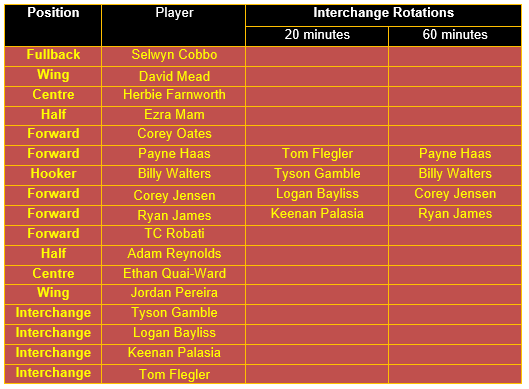
Based on the above analytical comparison, the Broncos’ aforementioned tactical basis and minimum required KPIs, and with Nui, Kelly, Willison, Carrigan, and Piakura recovering from injury, the 17 players which comprise the Broncos’ most productive team for their Round 7 clash vs the Canterbury Bulldogs would appear to be as follows:
Freddie08
Broncos Player Analysis: Round 6 Team Selection
Following the Broncos’ hard fought but disappointing performance against the Sydney Roosters, attention now turns to the Broncos’ clash versus the Penrith Panthers, and which 17 available players make up the Broncos’ most productive team for the match.
To do this, we need to look at the on-field production and the comparative ranking of each player which comprises the Broncos’ senior squad.
Methodology
In assessing the on-field production and the comparative ranking of each player which comprise the Broncos’ senior squad, each player is allocated into four positional categories (with some players considered in multiple positional categories due to their perceived versatility).
Those positional categories consist of:
- forwards;
- halves and hooker;
- centres and wingers; and
- fullback.
Once categorised, each player’s output in defined key performance indicators (KPIs) for their respective positional category is then considered, using data sourced from the NRL and QRL.
To provide a realistic picture of each individual player’s on-field production, only data from those seasons, throughout the player’s professional career, where the player has played at least 13 games in the NRL or Queensland Cup, was considered. Where a player has not met that criteria, their productivity data was not assessed.
The KPI data considered for each positional group is based on the assumption that the cornerstones of the Broncos’ tactical approach is as follows:
- To have minimal missed tackles (<2 missed tackles per player per game) in all positional categories.
- To generate 100+ run metres and multiple offloads per game from each player in the forward positional group (to create second phase play for the halves, hooker and/or fullback to individually break the opposition’s defensive line or create line break opportunities for the centre and winger positional group).
- To generate 100+ run metres and multiple line breaks per game from each player within the centre and wing positional group.
- To generate 100+ kicking metres and multiple line breaks, line break assists, and forced drop outs per game from each player in the halves and hooker and fullback positional groups.
The findings provide an invaluable insight as to:
- how each player ranks against their internal competition within their positional category; and
- which 17 players make up the Broncos’ most productive team.
Internal player rankings
The player rankings by position are as follows:
Round 6 line-up
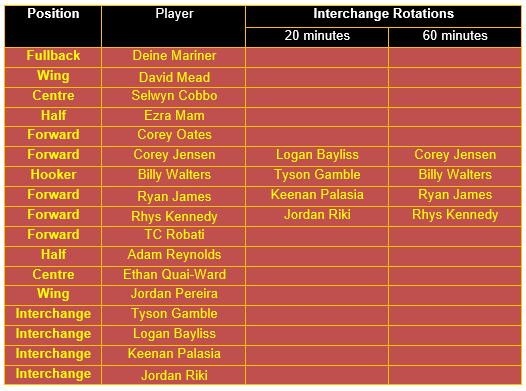
Based on the above analytical comparison, the Broncos’ aforementioned tactical basis and minimum required KPIs, and with Farnworth, Kelly, Willison, Carrigan, and Piakura recovering from injury, and Flegler and Haas suspended, the 17 players which comprise the Broncos’ most productive team for their Round 6 clash vs the Penrith Panthers would appear to be as follows:
Freddie08
Broncos Player Analysis: Round 5 Team Selection
Following the Broncos’ disappointing performance against the New Zealand Warriors, attention now turns to the Broncos’ clash versus the Sydney Roosters, and which 17 available players make up the Broncos’ most productive team for the match.
To do this, we need to look at the on-field production and the comparative ranking of each player which comprises the Broncos’ senior squad.
Methodology
In assessing the on-field production and the comparative ranking of each player which comprise the Broncos’ senior squad, each player is allocated into four positional categories (with some players considered in multiple positional categories due to their perceived versatility).
Those positional categories consist of:
- forwards;
- halves and hooker;
- centres and wingers; and
- fullback.
Once categorised, each player’s output in defined key performance indicators (KPIs) for their respective positional category is then considered, using data sourced from the NRL and QRL.
To provide a realistic picture of each individual player’s on-field production, only data from those seasons, throughout the player’s professional career, where the player has played at least 13 games in the NRL or Queensland Cup, was considered. Where a player has not met that criteria, their productivity data was not assessed.
The KPI data considered for each positional group is based on the assumption that the cornerstones of the Broncos’ tactical approach is as follows:
- To have minimal missed tackles (<2 missed tackles per player per game) in all positional categories.
- To generate 100+ run metres and multiple offloads per game from each player in the forward positional group (to create second phase play for the halves, hooker and/or fullback to individually break the opposition’s defensive line or create line break opportunities for the centre and winger positional group).
- To generate 100+ run metres and multiple line breaks per game from each player within the centre and wing positional group.
- To generate 100+ kicking metres and multiple line breaks, line break assists, and forced drop outs per game from each player in the halves and hooker and fullback positional groups.
The findings provide an invaluable insight as to:
- how each player ranks against their internal competition within their positional category; and
- which 17 players make up the Broncos’ most productive team.
Internal player rankings
The player rankings by position are as follows:
Round 5 line-up
Based on the above analytical comparison, the Broncos’ aforementioned tactical basis and minimum required KPIs, and with Kelly, Willison, Carrigan, and Piakura recovering from injury, and Flegler suspended, the 17 players which comprise the Broncos’ most productive team for their Round 5 clash vs the Sydney Roosters would appear to be as follows:
Freddie08
 My Brisbane Broncos